
Download PS3 BIOS – Complete Guide for PlayStation 3 Emulation

Your PS3 emulator is installed. You load a game. Black screen.
Sound familiar?
Nine out of ten times, the PS3 BIOS is missing. No BIOS means no games. It is that simple. This guide fixes that — permanently. We cover what the PS3 BIOS is, why every emulator needs it, how to download it safely, and how to install it correctly on any device.
No sketchy sites. No malware risks. Just the right file, from the right source, installed the right way.
What Is PS3 BIOS?
The PS3 BIOS is the core system file that powers PlayStation 3 emulation.
On a real console, Sony calls it the PS3 system software or PS3 firmware. It is the foundation every game runs on. It manages boot sequences, hardware communication, game authentication, and system stability.
On an emulator, it does the same job — but on your phone or PC instead of real PlayStation hardware.
Without the PS3 BIOS file, an emulator has no blueprint. It cannot talk to your device’s processor. It cannot load game files. It cannot authenticate discs. Nothing works.
The BIOS file you need is called PS3UPDAT.PUP. Sony releases it officially. You do not need to find it on shady download sites. More on that in a moment.
According to Sony’s official PlayStation support page, the latest PS3 system software version is 4.93, released March 2026. This is the file that works best with modern emulators.

PS3 System Software Update
Sony has updated the PS3 system software many times since launch. Each version improved security, stability, and hardware compatibility. Here is a breakdown of recent versions — and what changed in each.
PS3 System Software Update 4.93
🔥 PS3 Firmware Version 4.93
Released March 2026. Latest firmware with improved performance.
- Updated Blu-ray key
- Best for RPCS3
- High compatibility
File: PS3UPDAT.PUP (196 MB)
⚡ PS3 Firmware Version 4.92
Released early 2025. Performance improvements update.
- Stable system
- Similar to 4.93
- Good compatibility
🛠️ PS3 Firmware Version 4.91
Performance-focused with minor improvements.
- Better stability
- Smoother gameplay
- Optimizations
🛠️ PS3 Firmware Version 4.90
This update focused on system stability and background security improvements.
- No user-facing changes
- Security patches included
- Improved system reliability
🔐 PS3 Firmware Version 4.89
Major update introducing changes to PlayStation Network login system.
- Device password required for login
- Account creation removed from console
- Better account security via web/mobile
⚡ PS3 Firmware Version 4.88
Standard performance update with no major visible changes.
- System stability improved
- Minor internal fixes
- Optimized background processes
How to Update PS3 System Software
If you own a real PS3, updating is straightforward. Two methods work.
Method 1 — Update via Internet:
Your PS3 downloads and installs the latest firmware automatically.
Method 2 — PS3 Update via USB (Update via PC)
This PS3 firmware USB install method works even when your internet connection is unstable.
How to Reinstall PS3 System Software
Sometimes a PS3 needs a full software reinstall. This happens after initialization, a failed update, or serious system errors.
The process mirrors the USB update method above — but you use the full reinstall version of the firmware file, not just the update patch.
Sony warns: never turn off your PS3 during a system update. A cancelled update can corrupt the system software and require professional servicing.
Why You Need the PS3 BIOS on the Emulator?
PS3 games were engineered for Sony hardware. They communicate directly with the Cell processor, the RSX graphics chip, and the PS3 operating system layer underneath.
An emulator recreates that hardware environment in software on your phone or PC. But it cannot perfectly replicate every low-level system behavior on its own. The BIOS fills that gap.
Here is what the PS3 BIOS does inside an emulator:
Without the BIOS file, the emulator cannot complete any of these tasks. Games will not load, crash on startup, or produce audio and video errors.
This is why RPCS3 — the leading PS3 emulator for PC — makes firmware installation Step 1 of its setup guide. No exceptions.
How to Download PS3 BIOS on the Emulator?
Follow these steps exactly. This works for RPCS3 on PC and PS3 emulator Android setups.
⬇️ Step 1 — Download Emulator
PC Users: Download RPCS3 from official site rpcs3.net. It is free, open-source, and highly compatible.
Supports Windows 10, Windows 11, Linux, and macOS.
Android Users: PS3 emulation is still in early development. Many APKs are fake or unsafe.
📥 Step 2 — Download PS3 BIOS (Firmware)
Download PS3 firmware only from Sony official page:
URL: http://dus01.ps3.update.playstation.net/update/ps3/image/us/
File name: PS3UPDAT.PUP (~196 MB)
This is the same official update used by real PS3 consoles.
🚀 Step 3 — Launch Emulator
Open RPCS3 on your PC.
- First launch will ask for firmware installation
- You can install immediately or later from File menu
- After installation, emulator is ready for games
⚙️ Step 4 — Install the BIOS
Go to File > Install Firmware in RPCS3. A file browser will open.
- Navigate to your PS3UPDAT.PUP file location
- Select the file and click Open
- Wait while RPCS3 installs firmware modules
Installation takes around 30–90 seconds depending on system speed.
✅ Step 5 — Verify Installation
Check firmware status inside RPCS3:
- Go to Help > About
- Check displayed firmware version
- It should show 4.88 or higher (ideally 4.93)
Once confirmed, your emulator is ready for games.
Now add games via File > Add Games and start playing.
Download PS3 BIOS Requirements
Before downloading and running the PS3 BIOS on an emulator, make sure your device meets the minimum requirements.
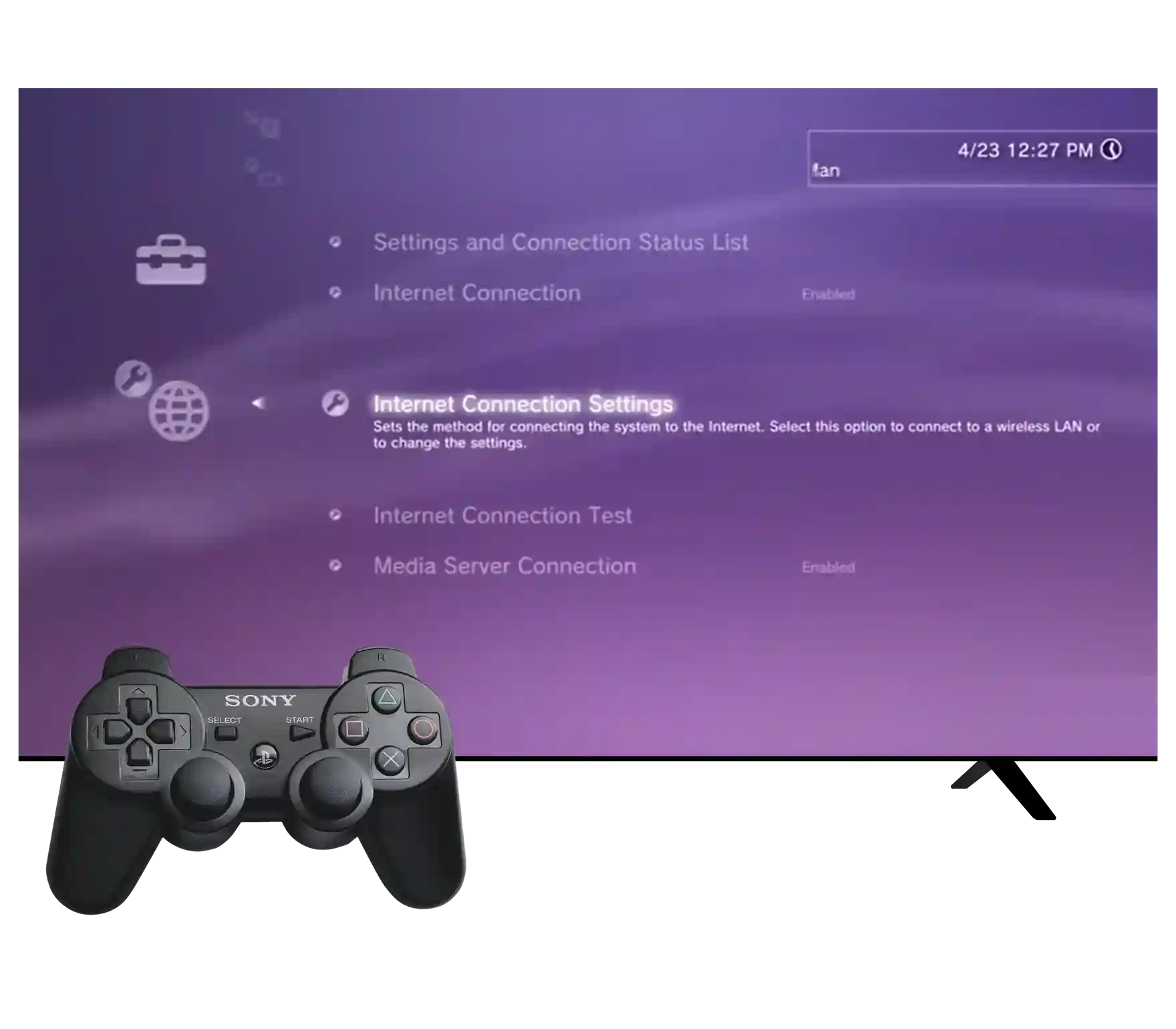
Download Links
Key Features of PS3 BIOS
Understanding what the PS3 BIOS does helps you troubleshoot problems faster. Here are its four core functions inside an emulator.
⚙️ System Boot Management
The BIOS runs before anything else. It initializes the emulated PS3 environment, checks system components, and hands control to the operating system layer. Without this step, no game will load.
🔐 Game Authentication Support
PS3 games use Sony’s copy protection system. The BIOS verifies that a game is a valid PS3 title before running it. Compatibility depends on how well authentication is handled for each game.
🧠 Hardware Communication
The PS3 Cell processor had a unique multi-core architecture. The BIOS manages communication between emulator, CPU, and GPU. Better compatibility improves FPS, stability, and audio performance.
🛡️ Stability and Error Control
The BIOS manages errors during gameplay. If a game requests system functions not fully supported by the emulator, the BIOS error handling system steps in. This improves stability and reduces crashes. Newer firmware like 4.93 improves how errors are detected and handled.
📚 System Library Access
PS3 games rely on system libraries for saving data, input handling, and menu rendering. These libraries are stored inside the BIOS and loaded during gameplay. Missing or corrupted BIOS files lead to broken functions and unplayable games.
PS3 Emulator Requirements
Running PS3 emulation properly takes real hardware. The PS3’s Cell processor was unlike any standard CPU. Emulating it is demanding.
⚙️ Minimum Requirements (RPCS3)
- OS: Windows 10 / Windows 11 (64-bit)
- CPU: Intel i5-6600 / Ryzen 5 1600
- RAM: 8 GB minimum (16 GB recommended)
- GPU: GTX 1050 Ti / RX 570 (Vulkan support required)
- Storage: SSD strongly recommended
🚀 Recommended Specs (1080p Smooth Gameplay)
- CPU: Intel i7-8700K / Ryzen 7 3700X
- RAM: 16 GB DDR4
- GPU: RTX 2060 / RX 5700 or better
- Performance Note: CPU is the most important factor
- Best API: Vulkan (AMD & NVIDIA supported)
⚠️ Important Note
- RPCS3 is heavily CPU-dependent.
- High single-core performance gives best results.
- Low-end CPUs will struggle even with strong GPU.
- SSD improves loading & stability.
Troubleshooting Common PS3 Emulator Errors
🖤 PS3 Emulator Black Screen Fix
Black screen on launch usually means BIOS is not installed. Go to File > Install Firmware and install PS3 firmware. If already installed, check Vulkan GPU settings in RPCS3.
⚠️ Firmware Not Found Error
RPCS3 cannot locate firmware. Reinstall PS3UPDAT.PUP using File > Install Firmware. Ensure file is complete and not corrupted.
🔊 No Sound Emulator Fix
Go to Audio settings in RPCS3. Switch between XAudio2 or Cubeb. One backend will work depending on your Windows drivers.
🎮 Controller Not Working
Connect your controller before launching RPCS3. Go to Pads settings and configure buttons manually. DualShock 4 and Xbox controllers are fully supported.
⚡ PS3 Emulator Lag Fix
Lower resolution to 1080p or 720p in GPU settings. Disable MSAA and anisotropic filtering. Close background apps. Use Vulkan renderer for AMD GPUs for better performance.
📦 Emulator Not Detecting BIOS
Ensure PS3UPDAT.PUP is not corrupted. Re-download from Sony official page. Update RPCS3 to latest version as older builds may reject new firmware.
Wrapping Up
Whether you’re keeping your PlayStation 3 software in tip-top shape or jumping into the world of emulation, getting familiar with your PS3 BIOS, firmware updates, and software tools is a great move. Remember, the best way to stay safe and legal is to use BIOS files extracted from your own console and always get updates directly from Sony. With the right setup, your games—whether classic or new—will run smoother and with fewer hiccups. Enjoy your gaming journey!
This guide covers the essentials about PS3 BIOS and everything around PlayStation 3 system software updates and emulation. The idea is to keep things simple, approachable, and useful for both newcomers and experienced gamers diving into the PS3 ecosystem today.
FAQs
Final Verdict
The PS3 BIOS is not optional. It is the engine underneath every game you want to run.
Download PS3UPDAT.PUP from Sony’s official PlayStation support page. Install it into RPCS3 via File > Install Firmware. Verify the version shows 4.93. Then add your games and play.
That is the complete process. No guesswork. No risk. No wasted time on sites that bundle malware with a firmware file Sony gives away for free.
For the best PS3 emulation experience in 2026, use RPCS3 on a PC that meets the recommended specs. Check game compatibility at the RPCS3 compatibility database before investing hours into a title that is not yet fully supported.