(PS2) BIOS for Batocera
Batocera PS2 BIOS – Download, Install & Fix Missing BIOS

Hey! So, you’re probably excited to play PlayStation 2 games on Batocera, right? That’s awesome — but before you can dive into your favorite games, there’s one important thing you need: the Batocera PS2 BIOS. Without the Batocera PS2 BIOS, your emulator won’t run properly, and you’ll miss out on smooth gameplay. If you’re also interested in other emulators, check out our guide on the PS3 BIOS. For detailed info about PS2 emulation, you can visit the PCSX2 BIOS guide.
“The Batocera PS2 BIOS is a small file, but it’s super important. It’s like the brain of the PlayStation 2. Without the Batocera PS2 BIOS, the system doesn’t know how to start or run games. Think of it like the engine in a car — the games are the fuel, but you need the Batocera PS2 BIOS to make everything work.
When you use this retro gaming platform, the Batocera PS2 BIOS helps it understand how to run PS2 games just like a real console would. Without the Batocera PS2 BIOS, the system can’t load PS2 games at all — they just won’t work. For more details about PlayStation 2 emulation, you can check the RetroArch official site.
Don’t worry if this sounds a little confusing at first. In this guide, I’ll walk you through everything step by step. There’s no technical language or hard-to-understand stuff — just simple instructions that anyone can follow. By the end, you’ll know exactly what the Batocera PS2 BIOS is, where to get the Batocera PS2 BIOS, how to install the Batocera PS2 BIOS, and how to start playing your favorite PS2 classics with no problems at all. If you need platform-specific help, check our PS2 BIOS for Mac guide.
What Is the Batocera PS2 BIOS — And Why Does Batocera Need It?
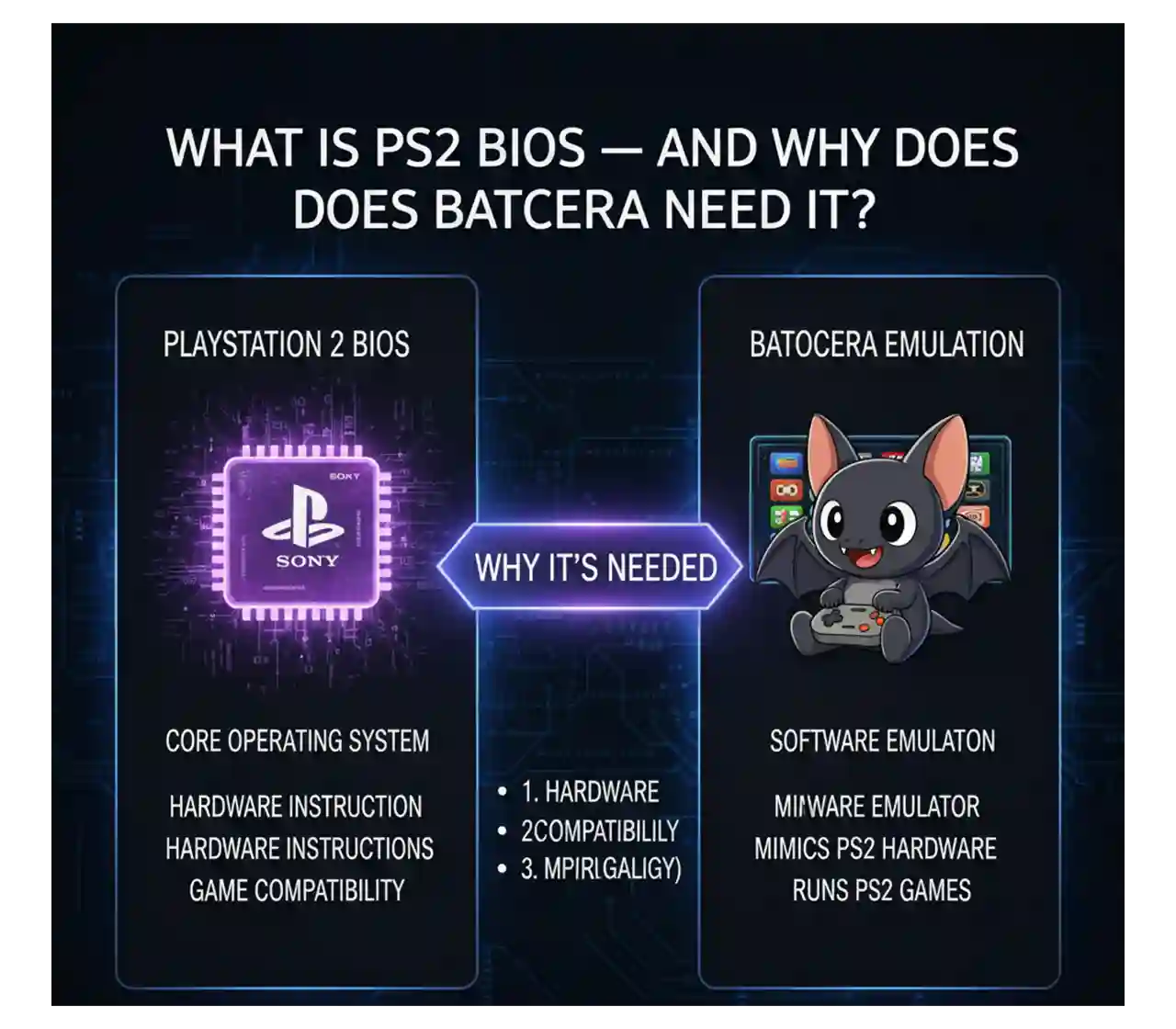
“Let’s break it down. The Batocera PS2 BIOS is like the brain of the PlayStation 2 console. It’s a small program that runs every time the PS2 starts up, helping it talk to the hardware and load games. When you want to play PS2 games on Batocera, you need the Batocera PS2 BIOS file because it helps the system know exactly how the PS2 works. Without the Batocera PS2 BIOS, your games won’t even launch — the emulator won’t know what to do.”
“Batocera is a retro gaming operating system that supports many classic consoles, including the PS2. But even though Batocera is powerful, it can’t run PS2 games on its own. It uses an emulator called PCSX2 (libretro core) to handle PlayStation 2 games, and that emulator needs the Batocera PS2 BIOS to function correctly. Without the Batocera PS2 BIOS, PS2 games won’t load properly, and you’ll see errors instead of gameplay. Setting up the Batocera PS2 BIOS ensures smooth compatibility and a true PlayStation 2 experience on your system.”
You might wonder, “Why is this BIOS so important?” Well, the PS2 is a pretty complex machine. It has different versions for different regions (like Japan, USA, Europe), and every version has its own way of handling games and hardware. The BIOS gives the emulator all the instructions it needs to act like a real PS2 console. That’s why it’s essential — it tells Batocera how to load and run your PS2 games just like the original system would.
Breaking Down PS2 BIOS Files: What You Need to Know
The PS2 BIOS isn’t just one file but a collection of firmware files that vary by region and version. These differences affect game compatibility and performance.
Major PS2 BIOS File Names and Their Regions
| BIOS File Name | Region | Notes |
| scph39001.bin | USA (NTSC) | Most common US BIOS |
| ps2-0230a-20080220.bin | Europe (PAL) | Common European BIOS |
| scph30004R.bin | Japan (NTSC) | Japanese region BIOS |
| EROM.BIN, ROM1.bin, ROM2.BIN | Core BIOS components | Required by some Batocera versions |
Why Region Matters
Each BIOS region primarily handles different game region formats, like NTSC for USA/Japan and PAL for Europe. Using the BIOS that matches your games’ region will reduce glitches and speed up compatibility. Some savvy users prefer region-free BIOS files, but these can sometimes cause problems with certain games.
Step-by-Step Guide: How to Install PS2 BIOS on Batocera
Step 1: Get Your PS2 BIOS Files Ready
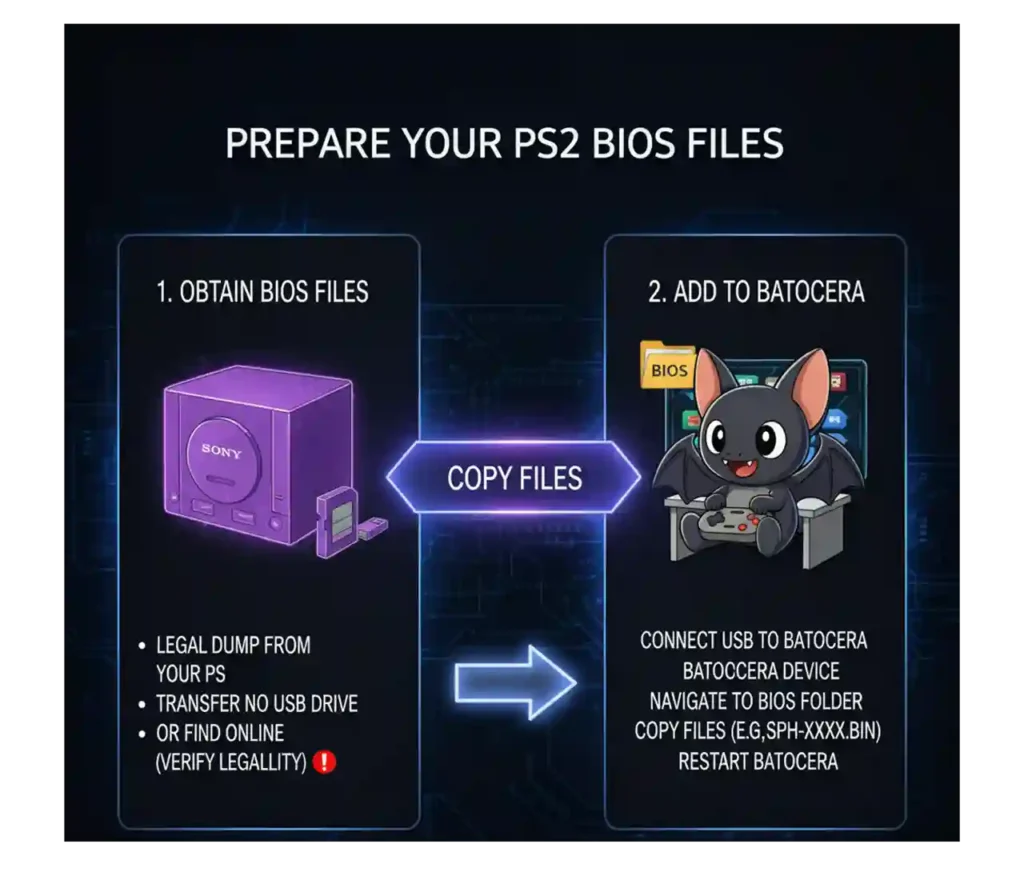
First things first, you need to make sure you have the correct PS2 BIOS files. These are special system files that help the emulator run games properly. The files usually end with “.bin” (like scph39001.bin). Make sure your files are not broken or incomplete — if they are, the games might not work correctly.
Step 2: Find the Right BIOS Folder on Batocera
Batocera needs the BIOS files to be in a specific location. The folder you need depends on which version of Batocera you’re using:
This is where you’ll place the BIOS files, so keep this location in mind.
Step 3: Copy BIOS Files to Batocera
Now you need to move your BIOS files from your computer to your Batocera device. There are two easy ways to do this:
Step 4: Make Sure File Names Are Correct
Batocera is very strict about file names. If the names are wrong or use capital letters, the BIOS might not work. So:
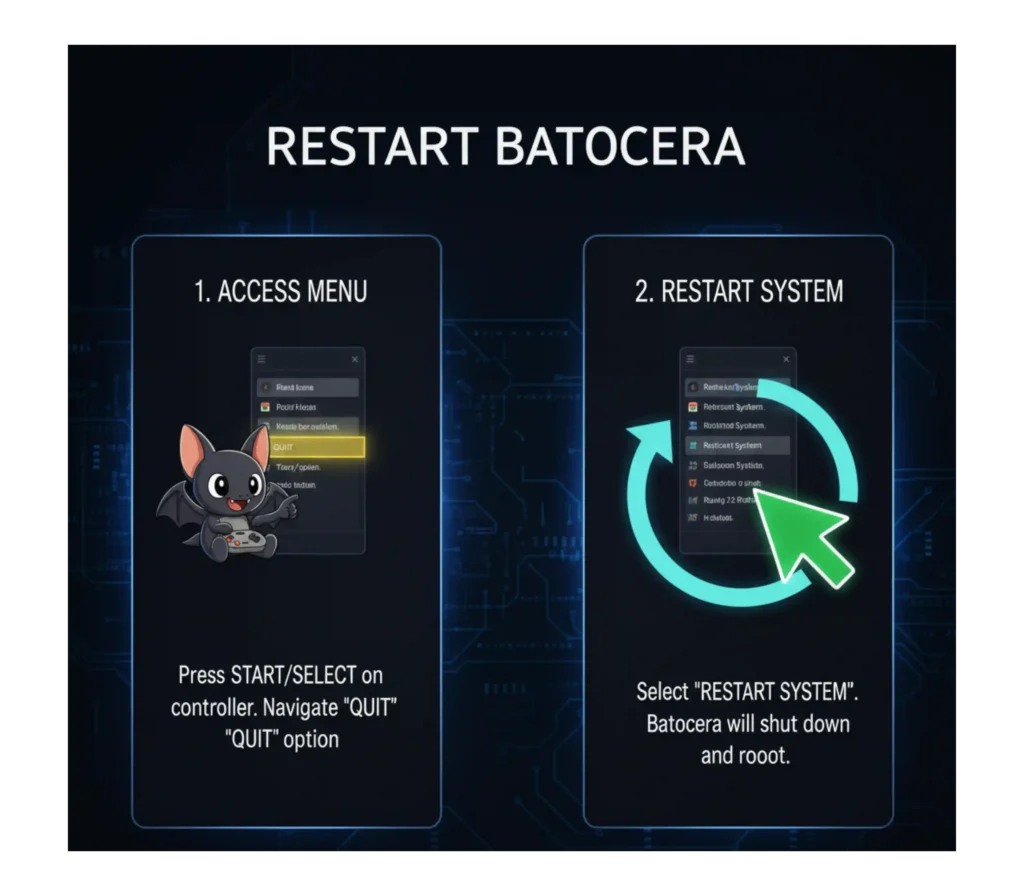
Step 5: Restart Batocera
Once everything is copied and named correctly, all you have to do is restart your Batocera system. After rebooting, it should automatically detect the BIOS files and you’ll be ready to launch and play PS2 games smoothly.
What Changes with Different Batocera Versions?
🛠️ Step-by-Step Guide: Installing PS2 BIOS on Batocera
✅ Step 1: Prepare Your PS2 BIOS Files
✅ Step 2: Locate the Correct BIOS Folder
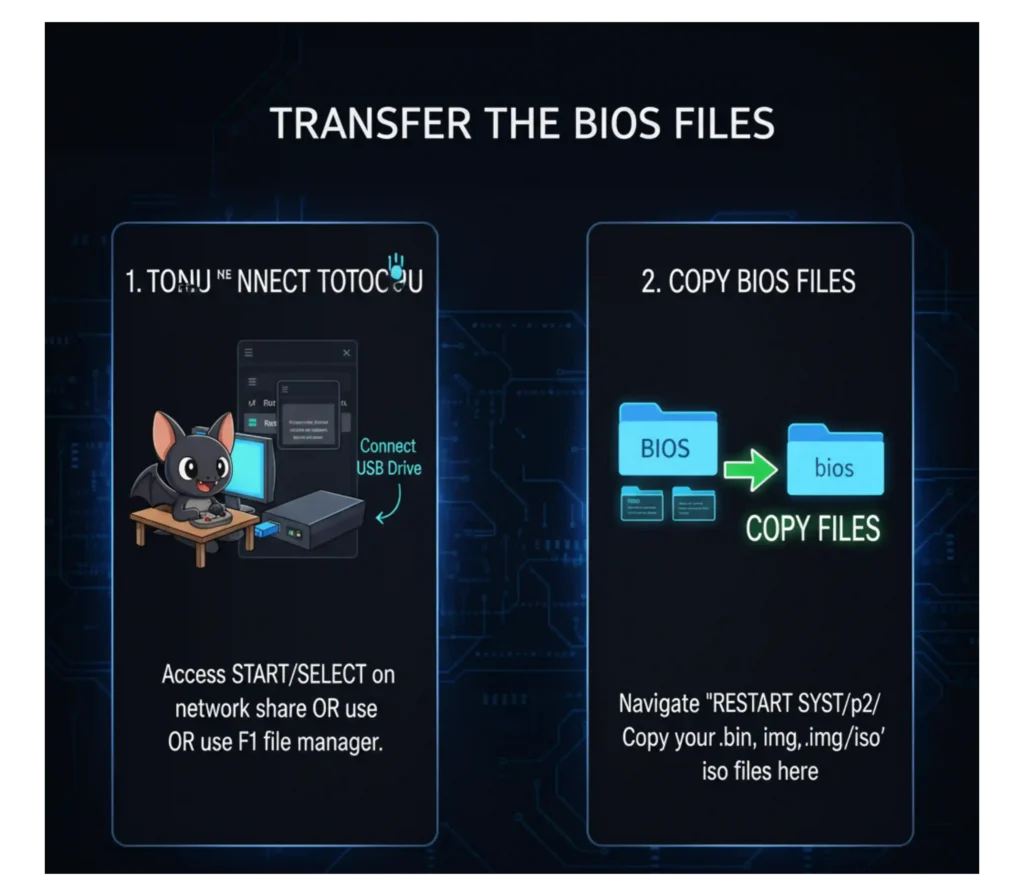
✅ Step 3: Transfer the BIOS Files
✅ Step 5: Restart Batocera
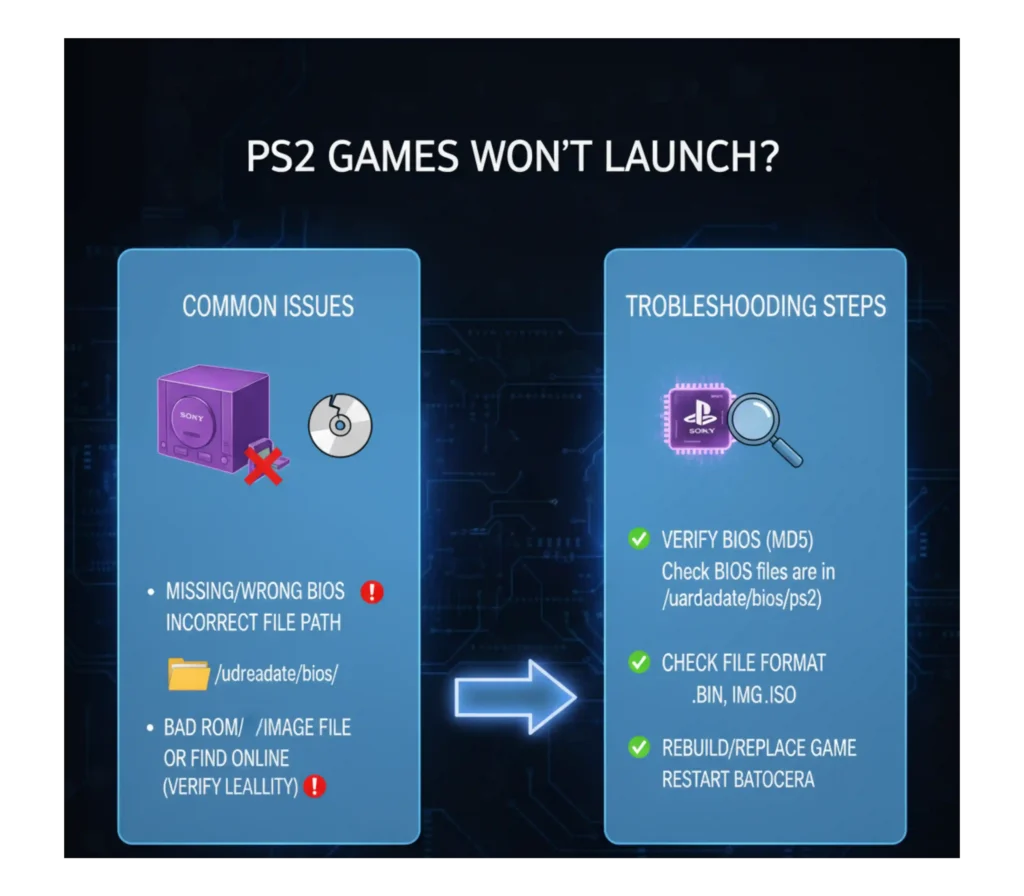
⚠️ Common Issues with PS2 BIOS on Batocera (And How to Fix Them)
🎮 PS2 Games Won’t Launch?
🧩 BIOS Not Recognized?
PS2 ROM Formats Compatible with Batocera
Supported formats:
Pro Tip: Use .chd for faster load times on slow storage devices.
What’s BatoceraPLUS / Batocera.PLUS-Bios?
These are community builds or packs:
Extra Tips for Getting the Most Out of PS2 Games on Batocera
Use Fast Boot Mode
Available in Batocera 40+. It skips redundant checks and loads games faster.
Organize ROMs
Keep filenames clean and consistent to improve metadata scraping.
Stay Updated
Newer Batocera versions often fix bugs and improve performance.
Community Support
Reddit, forums, and YouTube tutorials are your friends.
Handy Comparison of BIOS Files by Region
| Filename | Region | Notes |
| scph39001.bin | USA | Common NTSC BIOS |
| ps2-0230a-20080220.bin | Europe | Standard PAL BIOS |
| scph30004R.bin | Japan | NTSC BIOS for Japanese games |
| ps2-0250e-20100415.bin | Europe | Alternate PAL BIOS |